Welcome to our online store
New Products

Tuesday, 18 April 2023

Plantavit complete 500ml

€15.90
Plantavit complete is a comprehensive liquid fertilizer for planted aquariums. It contains a rich asortment of macronutrients, micronutrients and L-amino acids essential for the healthy growth of aquarium plants. The nutrients in Plantavit complete fertilizer are stabilized in seveal different ways using various chelates. Thanks to the optimal composition and ratio of ingredients, plants have everything they need for unhindered, strong and lush growth. That icludes nitrogen, phosphorus, potassium, magnesium, iron and other important elements useful for aquatic plants.

Tips for use and dosage

Recommended dose: 1 ml / 20 L - adds; 2,5 mg/L NO3, 0,5 mg/L PO4, 3 mg/L K, 0,2 mg/L Mg, 0,1 mg/L Fe + other trace elements

• Aquarium with strong lighting with the addition of CO2, densely planted: 1 ml / 20 L - daily
• Aquarium with moderate lighting with the addition of CO2: 1 ml / 20 L - 3 - 4 times a week
• Aquarium with low to moderate lighting without adding CO2: 1 ml / 20 L - 1-2 times a week
• Aquarium with low lighting without adding CO2 with few plants: 1 ml / 20 L - 1 time a week

When using Plantavit complete fertilizer, it is recommended to do a water change of 30 - 50% aquarium volume once a week.




Add to Cart View detail

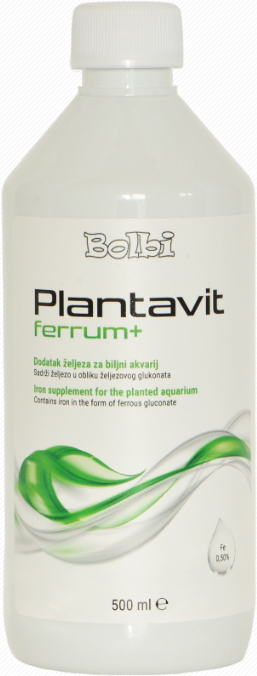
Plantavit ferrum+ 500ml

€7.50
Plantavit ferrum+ is a liquid fertilizer for planted aquariums which contains iron in the form of ferrous gluconate. Iron in this form is easily available to plants because the plant does not spend energy on its reduction as with chelated iron (EDTA, DTPA). In addition, ferrous gluconate has the added bonus of being a source of carbon. Iron plays a vital role in many enzymatic reactions of chlorophyll synthesis. Iron deficiency causes a decrease in chlorophyll production, which usually leads to chlorosis. A symptom of this is the yellowing of young leaves because iron is relatively immobile inside the plant.
Recommended iron concentrations in planted aquariums are from 0,05 to 0,2 mg/L.

Tips for use and dosage

Recommended dose: 1 ml / 50 L - adds 0,1 mg/L Fe *

• ideal for use in acidic/soft aquarium water with lower pH, provides highly usable iron for plants in these conditions, for immediate absorption.
• For the best effect, use on a daily basis.

* The dose is only an approximate recommendation, it can be adjusted depending on the preferred values.


Add to Cart View detail

Plantavit nitrogen+ 500ml

€6.50
Plantavit nitrogen+ is a liquid fertilizer for planted aquariums which contains nitrogen in the form of nitrates. Nitrogen in the form of nitrate is an important nutrient for aquatic plants. In densely planted aquariums or aquascapes, nitrate consumption can be so high that nitrate fertilizer must be added to prevent symptoms of nitrogen deficiency and weak and stunted plant growth. In some cases, an aquarium with a lot of fast-growing plants can have a daily consumption of up to 5 mg/L NO3.
Recommended concentrations of nitrates in planted aquariums are from 10 to 20 mg/L.

Tips for use and dosage

Recommended dose: 1 ml / 20 L - adds; 2,5 mg/L NO3, 0,56 mg/L N and 1,58 mg/L K

• Aquarium with strong lighting with the addition of CO2, densely planted: 1 ml / 20 L - daily *
• Aquarium with moderate lighting with the addition of CO2: 1 ml / 20 L - 3 - 4 times a week *
• Aquarium with low to moderate lighting without adding CO2: 1 ml / 20 L - 1-2 times a week *
• Aquarium with low lighting without adding CO2 with few plants: 1 ml / 20 L - 1 time a week *

* The dose is only an approximate recommendation and it should be adjusted depending on the nitrate consumption in the aquarium, which may differ for each individual aquarium.


Add to Cart View detail

Saturday, 15 April 2023

Plantavit phosphorus+ 500ml

€6.50
Plantavit phosphorus+ is a liquid fertilizer for planted aquariums which contains phosphorus in the form of phosphate. Phosphorus plays a decisive role in plant metabolism. It regulates the intracellular energy balance and biological cellular processes by phosphorylating proteins, and it is a part of nucleic acids (DNA, RNA) and the cellular membrane (phospholipids). In aquariums with strong plant growth and a small number of fish that are fed sparingly, sources of organic phosphate are often insufficient, so inorganic phosphate must be added.
Recommended concentrations of phosphates in planted aquariums are from 0,2 to 4 mg/L PO4.

Tips for use and dosage

Recommended dose: 1 ml / 50 L - adds; 0,2 mg/L PO4, 0,07 mg/L P and 0,08 mg/L K

• Aquarium with strong lighting with the addition of CO2, densely planted: 1 ml / 50 L - daily *
• Aquarium with moderate lighting with the addition of CO2: 1 ml / 50 L - 3 - 4 times a week *
• Aquarium with low to moderate lighting without adding CO2: 1 ml / 50 L - 1-2 times a week *
• Aquarium with low lighting without adding CO2 with few plants: 1 ml / 50 L - 1 time a week *

* The dose is only an approximate recommendation and it should be adjusted depending on the phosphate consumption in the aquarium, which may differ for each individual aquarium.


Add to Cart View detail

Plantavit potassium+ 500ml

€6.50
Plantavit potassium+ is a liquid fertilizer for planted aquariums which contains potassium. Potassium plays a vital role in photosynthesis and many other biological functions within the plant. In compared to other nutrients, K+ is highly soluble and highly mobile within the plant. Potassium deficiency has a significant negative effect on plants. A typical indicator of potassium deficiency are perforated leaves or dying leaf tissue (necrosis).
Recommended concentrations of potassium in planted aquariums are from 5 to 20 mg/L.

Tips for use and dosage

Recommended dose: 1 ml / 20 L - adds; 2 mg/L K and 0,82 mg/L S

• Aquarium with strong lighting with the addition of CO2, densely planted: 1 ml / 20 L - daily *
• Aquarium with moderate lighting with the addition of CO2: 1 ml / 20 L - 3 - 4 times a week *
• Aquarium with low to moderate lighting without adding CO2: 1 ml / 20 L - 1-2 times a week *
• Aquarium with low lighting without adding CO2 with few plants: 1 ml / 20 L - 1 time a week *

* The dose is only an approximate recommendation and it should be adjusted depending on the potassium consumption in the aquarium, which may differ for each individual aquarium.


Add to Cart View detail

Micranthemum umbrosum

€3.90
Micranthemum umbrosum is a delicate light green bushy stem plant with small round leaves. It is most attractive when cultivated as a dense bush in the fore- and middle ground. A relatively strong lighting with at least 0.5 W/litre is required for good growth, all in all, Micranthemum umbrosum is not very difficult in cultivation. Sometimes M. umbrosum has difficulties adapting to a new environment, but once acclimated it is not a very demanding plant, apart from its hunger for light. A relatively strong lighting of at least 0.5 W/L is required for good growth. A lack of light results in the plant throwing off its lower leaves, or in holey leaves. At the same time, the stems become brittle and tends to break, so small pieces of the plant drift to the surface where light is more intensive. This plant may be cultivated without additional CO2 injection, however, its growth rate decreases significantly, and the leaves grow smaller. If the basic requirements of M. umbrosum are met, it is really easy to propagate. Just cut off a main shoot somewhere on the stem and re-plant it in the substrate, it will grow new roots very quickly and form a stand-alone plant after a very short time. M. umbrosum tends to throw a large number of new lateral shoots, which develop in the leaf axils some centimetres below the top of a main shoot. If you cut back the plant you can further this development even more, and by frequent trimming you can create rather dense plant mats. M. umbrosum is usually planted in the middle- or background of an aquascape. Extremely strong lighting may induce it to grow rather flattish and creeping, then it can also be used in the foreground of the aquarium.


Price per: 5 stems.

This item can be shipped ONLY to Europe.

Add to Cart View detail

Thursday, 11 August 2022

Cryptocoryne nurii 'Platinum'

€79.90
The cultivar 'Platinum' is found on Lingga island in the Riau Archipellago province of Sumatra. Each stream has several patches with the broad leaved C. nurii var. nurii. This special one has white veins as a permanent character and is therefore attractive for aquarists. It was discovered in 2009 by Mr. Nakamoto and in 2014 Mr. Kettner described this cultivar. A true gem for any crypt collector!

Price per: 1 plant (grown emersed).

This item can be shipped ONLY to Europe.


Add to Cart View detail

Mayaca sp. 'Santarem Red'

€6.90
Mayaca sp. 'Santarem Red' is a rather small to medium-sized aquatic plant, native to Brazil. In Europe it is hardly known and has not yet been scientifically researched. We refer to it as Santarém moss herb. In terms of its appearance, it is a fine-leaved and at the same time sublime aquatic plant, which knows of its beauty and elegance. It's amazing that it looks very natural despite its peculiarity. In terms of color, it brings out shades of light green to pink and reddish shades, where the stem, on the other hand, remains whitish. Requirements of this plant, if you want to see these bright/deep hues of red, you will need stronger lighting to bring it out. Fertilizers will help bring out the colors, but they aren’t necessary to keep this plant growing healthily. If you consider a few things that Mayaca sp. Santarem claims, it is a beautiful plant that is also suitable for newcomers.

Price per: 5 stems.

This item can be shipped ONLY to Europe.

Add to Cart View detail

Lomariopsis cf. lineata "Subwassertang"

€6.90
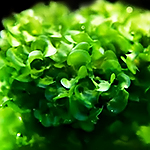
The "Suesswassertang" ("Freshwater seaweed") is an exceptional aquarium plant that became known in Germany first, but likely originates from tropical Asia. It is neither a moss nor an algae but the prothallium (gametophyte) stage of a fern of the genus Lomariopsis. It can be used like Monosolenium tenerum, but it has several advantages over the latter: the thalli are far less brittle and will attach themselves to decorative material with their rhizoids. The freshly green cushions of Lomariopsis cf. lineata with their transparent, roundish branches are an eyecatcher in every aquarium. The Lomariopsis prothallium does not grow too slowly and has no special requirements. However it looks best when grown with at least medium strong lighting and good CO2 and nutrient supply. With very low light it will form rather narrow, strap-shaped branchings. Lomariopsis cf. lineata is variously applicable: tied on rock or wood, or stuffed into the gaps of the hardscape. Grown on moss pads, it makes even an unusual ground cover. Too big cushions are easily reduced by picking or cutting. Loose masses of the "Suesswassertang" are also useful in breeding tanks.

Each portion is: 5x5 cm.

This item can be shipped ONLY to Europe.

Add to Cart View detail

Friday, 8 October 2021

Nymphaea gardneriana 'Santarem'

€24.90
This remarkable, small waterlily from South America became known only recently as Nymphaea sp. 'Santarem'. It was apparently collected in the Brazilian Amazon region near Santarém and probably introduced to Japan first. It is said to belong to Nymphaea gardneriana that is widespread in tropical South America. In Europe it is still a little known rarity. Its submerged leaves display olive green, brownish to reddish tones with a slight dark red spot pattern. The younger leaf stalks are finely haired. The plant stays quite low, especially under intense lighting. It propagates under aquarium conditions by runners. Nymphaea gardneriana 'Santarem' has apparently no special demands, however we recommend nutrient-rich substrate, rather strong lighting and a good CO2 and nutrient supply via the water column. Low lighting causes long leaf stalks. Well-growing plants develop many runners in and above the ground, ending in young plantlets. Especially when the water level is low, this waterlily also develops floating leaves that can be removed if they are unwanted. However floating leaves should be left if development of flowers is desired. Nymphaea gardneriana is night-blooming as well as the related Nymphaea glandulifera; the white flowers are strongly scented. This waterlily novelty looks nice in the foreground and midground. It offers interesting possibilities for the aquascaping, for example combined with slender driftwood and vertical, grass-like plants such as Eleocharis sp. 'montevidensis'. It forms a decorative group by its runners.

Price per: 1 plant.

This item can be shipped ONLY to Europe.


Add to Cart View detail

Bucephalandra sp. 'Dark Afika'

€18.90
Based on their appearance, Bucephalandras are similar to Anubias and Cryptocoryne species. When they were first introduced to the aquarium hobby, they were compared to Cryptocoryne species because of their narrow and usually olive-colored leaves. However, their creeping rhizomes and prehensile roots fit the characteristics of Anubias more closely. Bucephalandra is a wonderful and still relatively hard-to-find genus of plants that captivate many aquarists across the world thanks to their majestic appearance. Bucephalandras are an epiphyte endemic plants from Borneo island. Slow groing rare aquatic plants with a unique appearance. There are more than 200 species available today with different leaf shape and size. In general bucephalandras are hardy slow growing plants sutable for a range of different styles of aquarium. Relatively new to the hobby but gaining popularity rapidly. Because of their low demand are a good addition to any shrimp aquarium. Bucephalandra can be tied to rocks or wood, or have the roots buried in substrate (do not bury the rhizome). They are very hardy plants once they adjust to your tank and can tolerate a wide range of aquarium conditions including temperature, PH, and water hardness.

Price per: 1 plant with 5+ leaves on the rhizome.

This item can be shipped internationally.


Add to Cart View detail

Bucephalandra sp. 'Catherinae'

€8.90
Based on their appearance, Bucephalandras are similar to Anubias and Cryptocoryne species. When they were first introduced to the aquarium hobby, they were compared to Cryptocoryne species because of their narrow and usually olive-colored leaves. However, their creeping rhizomes and prehensile roots fit the characteristics of Anubias more closely. Bucephalandra is a wonderful and still relatively hard-to-find genus of plants that captivate many aquarists across the world thanks to their majestic appearance. Bucephalandras are an epiphyte endemic plants from Borneo island. Slow groing rare aquatic plants with a unique appearance. There are more than 200 species available today with different leaf shape and size. In general bucephalandras are hardy slow growing plants sutable for a range of different styles of aquarium. Relatively new to the hobby but gaining popularity rapidly. Because of their low demand are a good addition to any shrimp aquarium. Bucephalandra can be tied to rocks or wood, or have the roots buried in substrate (do not bury the rhizome). They are very hardy plants once they adjust to your tank and can tolerate a wide range of aquarium conditions including temperature, PH, and water hardness.

Price per: 1 plant with 8+ leaves on the rhizome.

This item can be shipped internationally.
 
This is medium size Bucephalandra species! Leaf size approx. 3 - 5 cm in lenght!

Add to Cart View detail

Friday, 21 May 2021

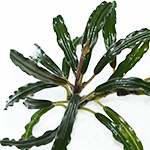
Didymoglossum erosum (Bolbitis sp. 'Buea')

€6.95
This mini fern originates from the region of north Buea, Cameroon. It is found on the banks of small rivers and streams, but also grows in the constantly humid rainforest area. The plant forms a dense plant of rhizomes with many very vertical leaves and likes soft or medium-hard water (KH up to 12). The color is wonderfully light green, slightly transparent and there are clear leaf veins. Ideally, this small fern can be tied to the stones or wood. It does not need very much light and forms a few new leaves per month.

Price per: plant with 10+ leaves on the rhizome.

This item can be shipped internationally.

Add to Cart View detail

Bucephalandra sp. 'Red Velvet'

€9.90
Based on their appearance, Bucephalandras are similar to Anubias and Cryptocoryne species. When they were first introduced to the aquarium hobby, they were compared to Cryptocoryne species because of their narrow and usually olive-colored leaves. However, their creeping rhizomes and prehensile roots fit the characteristics of Anubias more closely. Bucephalandra is a wonderful and still relatively hard-to-find genus of plants that captivate many aquarists across the world thanks to their majestic appearance. Bucephalandras are an epiphyte endemic plants from Borneo island. Slow groing rare aquatic plants with a unique appearance. There are more than 200 species available today with different leaf shape and size. In general bucephalandras are hardy slow growing plants sutable for a range of different styles of aquarium. Relatively new to the hobby but gaining popularity rapidly. Because of their low demand are a good addition to any shrimp aquarium. Bucephalandra can be tied to rocks or wood, or have the roots buried in substrate (do not bury the rhizome). They are very hardy plants once they adjust to your tank and can tolerate a wide range of aquarium conditions including temperature, PH, and water hardness.

Price per: 1 plant with 8+ leaves on the rhizome.

This item can be shipped internationally.
 
This is medium size Bucephalandra species! Leaf size approx. 3 - 5 cm in lenght!

Add to Cart View detail

Bucephalandra sp. 'Lamandau Round'

€7.50
Bucephalandra is a wonderful and still relatively hard-to-find genus of plants that captivate many aquarists across the world thanks to their majestic appearance. Bucephalandras are an epiphyte endemic plants from Borneo island. Slow groing rare aquatic plants with a unique appearance. There are more than 200 species available today with different leaf shape and size. In general bucephalandras are hardy slow growing plants sutable for a range of different styles of aquarium. Relatively new to the hobby but gaining popularity rapidly. Because of their low demand are a good addition to any shrimp aquarium. Bucephalandra can be tied to rocks or wood, or have the roots buried in substrate (do not bury the rhizome). They are very hardy plants once they adjust to your tank and can tolerate a wide range of aquarium conditions including temperature, PH, and water hardness.

Price per: plant with 6+ leaves on the rhizome.

This item can be shipped internationally.

This is medium size Bucephalandra species! Leaf size about 2-3 cm in lenght

Add to Cart View detail

Wednesday, 11 November 2020

Fissidens sp. 'Wayanad'

€25.90
This interesting and very rare variety of Fissidens moss originates from India. The feather-like, soft shoots are about 2-3 mm wide, branched at the base and have a decumbent to ascending growth habit. In the aquarium, Fissidens sp. 'Wayanad' grows slowly and benefits from a good supply of nutrients and CO2. It can be grown in non CO2 aquarium but it will grow very slowly. The small shoots are best tied to driftwood, rock or ceramic moss pads. Alternatively, you can also squeeze them into cracks of wood or stones. Another option is application by "yogurt method".
With its rather spreading, densely ramified growth, Fissidens sp. 'Wayanad' is best suited to be used for aquascaping. This filigree moss is one of the most beautiful epiphytes currently available and can be used for the greening of hardscape in many ways. Its deeply green, delicately textured cushions are an eye-catcher in bigger aquascapes as well as in nano aquariums!

Each portion is: moss grown on Dogwood disc Ø 35 - 40 mm.

This item can be shipped internationally.

Add to Cart View detail

Thursday, 5 November 2020

Tonina fluviatilis

€7.50
Tonina fluviatilis is an exceptional, especially decorative stem plant from the tropics of Central and South America. There it grows emersed and submerged in soft, acid, clear waters, also in blackwater biotopes. It is a member of the Pipewort family (Eriocaulaceae) as well as Eriocaulon and Syngonanthus. Only in recent times Tonina fluviatilis has gained wider distribution in the aquarium hobby. Its thin, branched stems are densely set with lanceolate, only about 1 - 1.5 cm long leaves that are a freshly light green colour with slightly silvery shine under water. As a typical soft water plant, Tonina fluviatilis is suited for appropriate aquariums with soft, rather acid water and high CO2 concentration (about 20-30 mg/l). It prefers also strong lighting. An acid substrate, for example a type of aquasoil, is recommendable, as well as as a balanced nutrient supply, particularly with micronutrients. Its growth rate is only moderate. Tonina is easily propagated by stem cuttings. Tonina fluviatilis looks especially well as a group in the midground to background. With its exotic habit it fits well in tanks with other unusual plants, e.g. Syngonanthus and Eriocaulon species, sharing the same demands with them. It is also interesting for blackwater biotope aquariums, provided that its high lighting and CO2 demands can be covered.


Price per: 3 stems.

This item can be shipped ONLY to Europe.


Add to Cart View detail

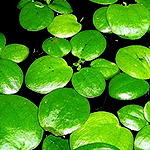
Limnobium laevigatum

€3.90
South-American frogbit is a popular floating plant for aquaria that is rather undemanding and grows fast. Its round smooth leaves are attractive in open tanks, the long roots bring a very natural, primeval feel to the aquarium. Limnobium laevigatum is especially suitable for fish and shrimp breeding tanks, as it removes surplus nutrients from the water very efficiently. The growth habit of the Amazon frogbit is comparable to other floating plants. The floating rosette forms runners regularly, at whose ends young plants grow. In calm-water zones of the aquarium, carpets of these plants will form after a relatively short time, which may lead to uncalled-for shading of the ground. Under strong light, with good fertilisation and high air humidity, emersed leaves may form above the waterline. CO2 injection furthers growth. This plant may even flower in the aquarium, although rarely. Propagation happens automatically. Under optimal conditions you will have a large quantity of frogbit very soon in your tank. Many people don't see how floating plants help an aquarium layout, as they create shaded areas and grow very long vertical roots. However, just these aspects can be integrated into a design. The play of shade and light can create interesting contrasts in a layout, and the elegant-looking roots may have a very decorative effect.


Price per: 5 plants.

This item can be shipped ONLY to Europe.


Add to Cart View detail

Copyright © 2025. Bolbi Aqua - All Rights Reserved

Proudly powered by Blogger